Imagine a landscape dotted with 365 towering turbines, continuously harnessing the power of the wind. This is the 310MW Lake Turkana Wind Power (LTWP), Africa’s largest wind farm, which has contributed 12% to Kenya’s grid energy supply in the last six years.
The Marsabit wind effectively powers one in every eight light bulbs in the country, bringing light and opportunity to communities across Kenya.
But how does it work and what impact are we making in Marsabit County? The answers are in episodes three and four of the Turbines of Marsabit podcast where our CEO Max Schiff pulls back the curtain on this remarkable operation.
Harvesting wind and feeding the national grid
For our wind farm to generate a total of 9.5 billion kWh since 2018 is no mean fete. Our operation delivers a performance that is among the best of any wind farm in the world, in terms of availability and production. Every employee plays a part in ensuring we are lighting Kenya consistently, reliably and affordably. It is a team effort.
Everything starts with our 365 V52 Vestas wind turbines, each with a capacity of 850KW. These turbines effectively slow the wind down and transfer some of its kinetic energy into electrical energy. This is then transmitted via our internal collection network to the substation.
“We have about 160 kilometres worth of internal collection network, which looks like the distribution network you see around town,” our CEO explains in the podcast
At the substation, voltage is stepped up to 220kV and the electrical energy generated by LTWP is handed over to Kenya Electricity Transmission Company Limited (KETRACO). KETRACO owns and operates the 348-kilometre transmission line, which carries the energy from LTWP to Suswa, in Naivasha. Subsequently, Kenya Power and Lighting takes charge of distribution, delivery and sale to customers.
LTWP’s energy generation can power a million homes daily in Kenya if you are looking at an average home connected to the grid. “Kenya Power has about nine and a half million connected customers, and we supply about 12% of the country’s energy. Another way to look at it is like one in every eight bulbs in Kenya is being powered by wind energy from our plant in Marsabit,” notes Mr Schiff.
LTWP heroes
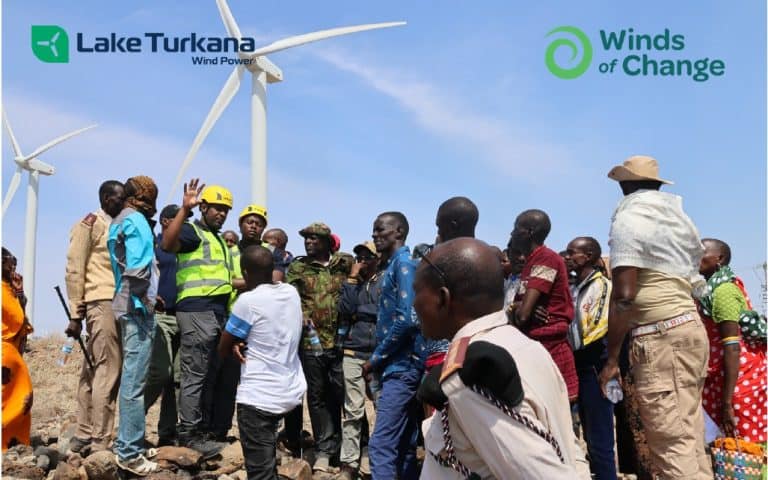
Behind the scenes, everything is made possible by our employees – over 300 of them – of whom 99% are Kenyans, primarily from communities of Marsabit, where LTWP is the largest non-governmental employer. Our ability to source much of our talent from Marsabit allows us to provide stable incomes and foster economic empowerment in the county.
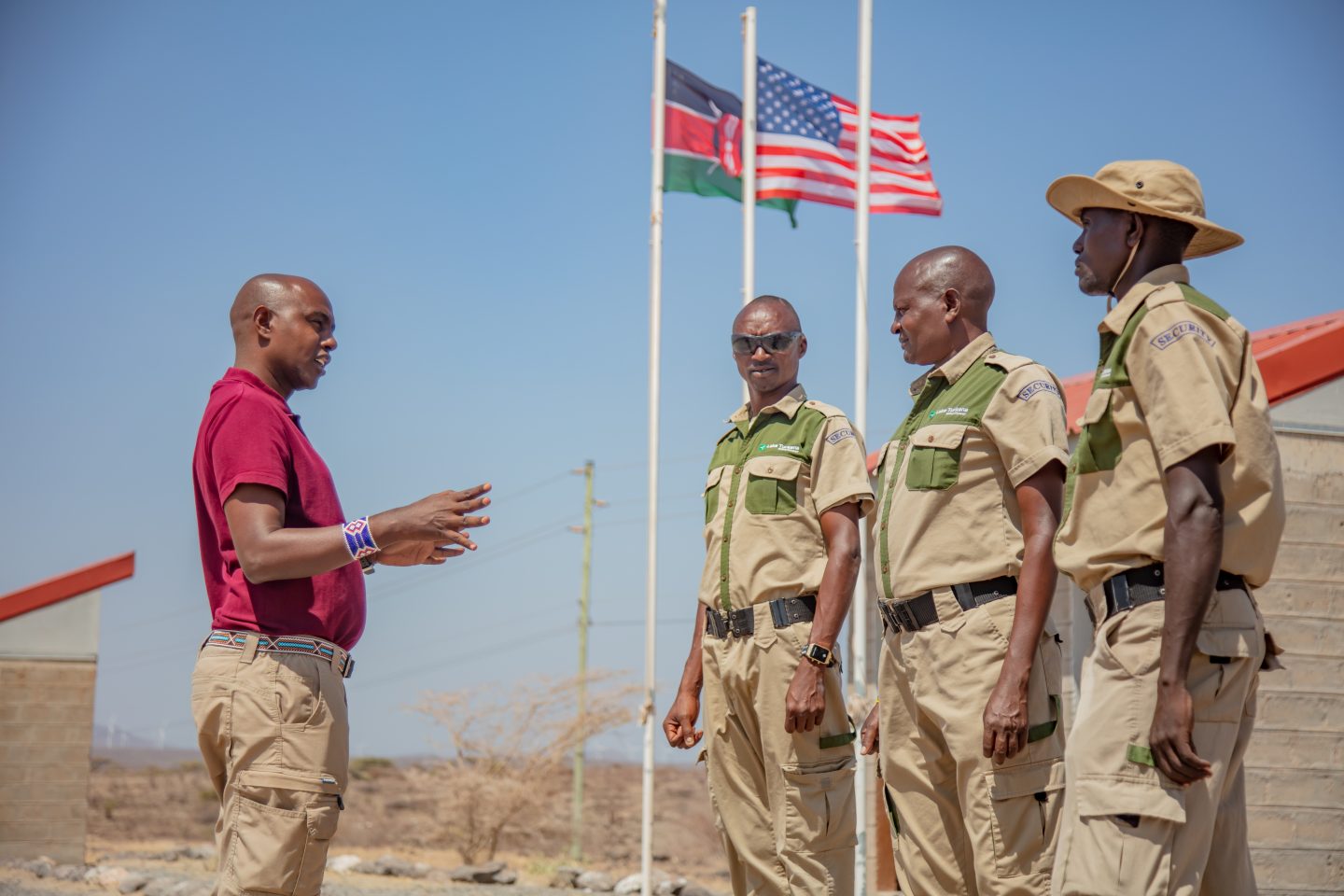
“80% of employees are from Marsabit. We try our hardest to make sure that people from the community fill as many positions as possible. If we don’t find the talent we require locally, then we hire from other parts of the country. That’s our responsibility as a sustainable business and high-performing power plant.” Mr. Schiff says.
Our employees are LTWP heroes. For us to be at full capacity, our teams work together to keep the turbines running day and night and all parts of our site in top condition. The plant availability exceeds 98%. Combined with the high-speed wind regime at the site, this availability makes it one of the most efficient wind power plants globally. To ensure the long-term performance of the plant, our Maintenance Team adheres to strict maintenance schedules. Sustaining an availability of over 98% whilst doing this is an outstanding achievement by all involved.
Then we have our Operations and Dispatch Team, running a 24-hour program. This team monitors the entire wind farm using a SCADA (Supervisory Control and Data Acquisition) system in the control room. This control room is manned every minute of every day to ensure plant performance and efficient energy dispatch to the grid. They monitor all our 365 turbines, track performance and alert the Maintenance team to any potential issues across the 40,000-acre site.
The Dispatch Team forecasts wind speeds and related energy production. They also coordinate with the National Control Centre (NCC), operated by Kenya Power, which is responsible for operating the grid and ensuring supply and demand are matched. Maximising the contribution of LTWP’s clean affordable energy to the national grid supply, allowing lower consumer prices, requires constant communication and coordination between the Dispatch team and the system operator (NCC).
These technical teams are supported by numerous departments including Security, Administration, Workshop, Community Liaison, Human Resources, Road Works and Finance, without which their work would not be possible. Together we are contributing to Kenya’s ambitious target to achieve a 100% green energy transition by 2030.
Community investment
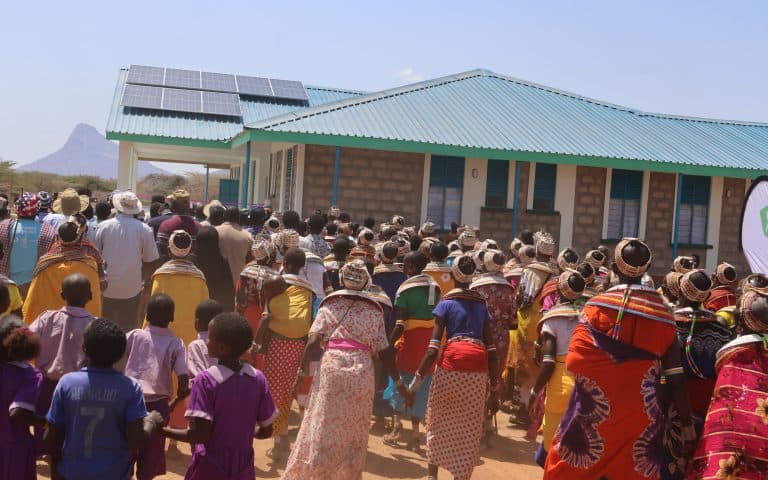
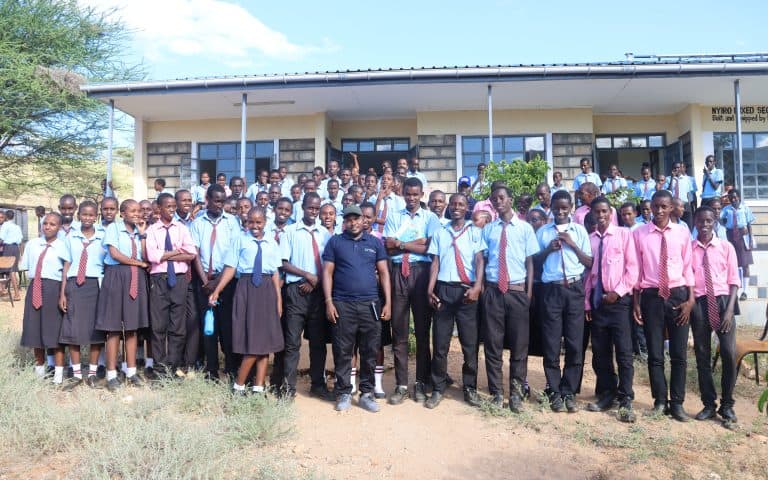
The Turbines of Marsabit podcast also highlights the impact the project has had on the local community. Through our NGO Winds of Change (WoC), we have spent more than Euros 6 million (KSh 840 million) on community health, education, and water initiatives in the Laisamis constituency.
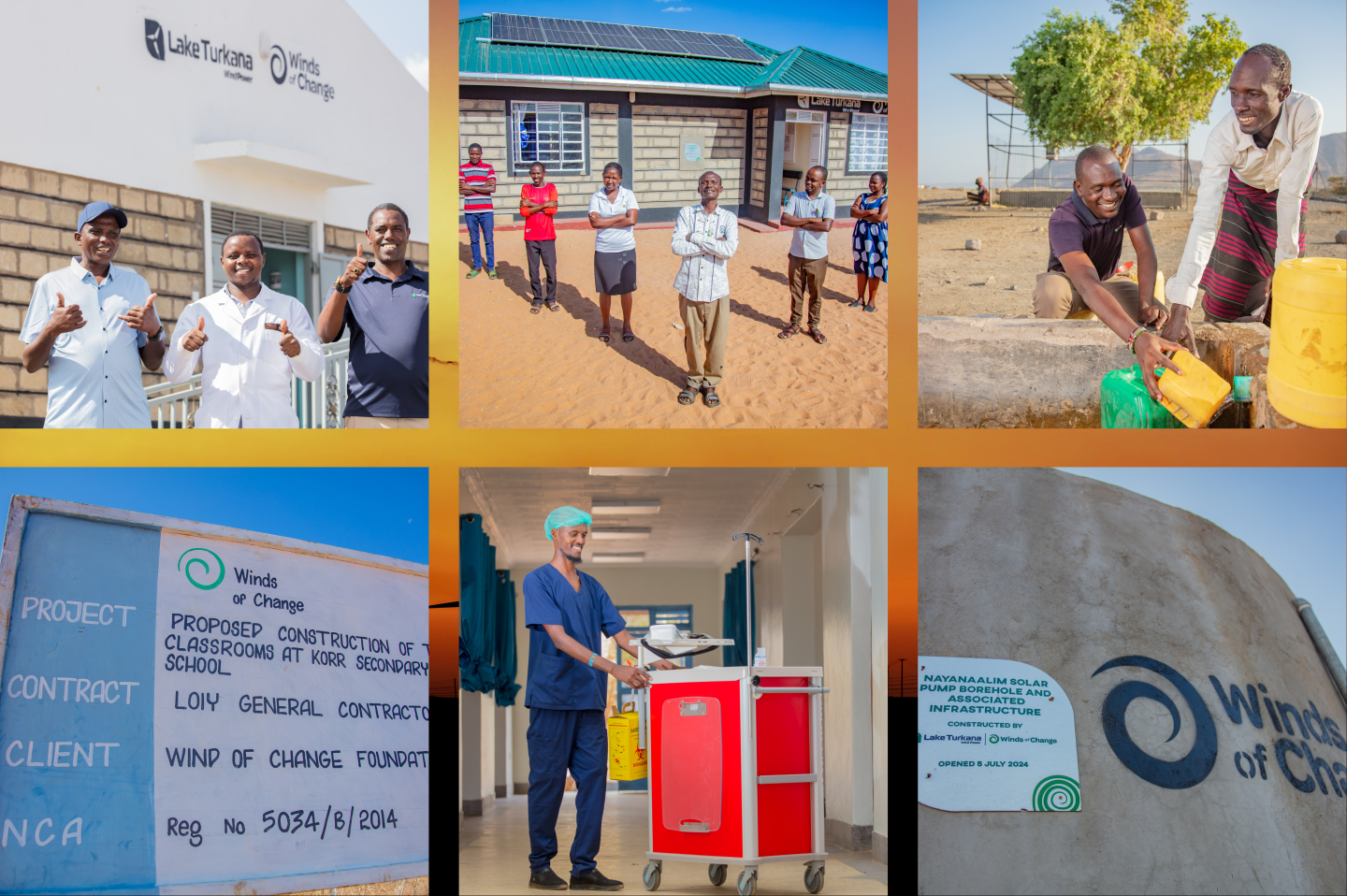
“When we look at our focus areas of health, education, and water, the need is so huge that we can’t address it alone,” explains Mr. Schiff, adding that community work has remained part of the LTWP DNA since its inception. “Our board allocates funds every year for Winds of Change to deliver more projects to keep delivering value and impact in our focus areas. We also keep funds aside for any emergency relief.”
On why the company has yet to earn any carbon credits for its green initiatives, Mr. Schiff explains that to date, LTWP has not sold any carbon credits. “We have not generated any revenue from carbon credits. It’s a frustration for us because the agreement under our PPA (Power Purchase Agreement) is that if we can generate revenue from carbon credits, we will effectively give it to the National Treasury via KPLC, and then it will be spent on communities along the transmission line. Hence we continue to try and find avenues to issue and commercialise carbon credits for the benefit of these communities.”
Mr. Schiff is upbeat that, with 14 years remaining on the PPA, the Laisamis community can look forward to continuing meaningful and impactful investment from LTWP and WoC. No doubt LTWP is a successful case study of collaboration between the government, local communities, and global investors.