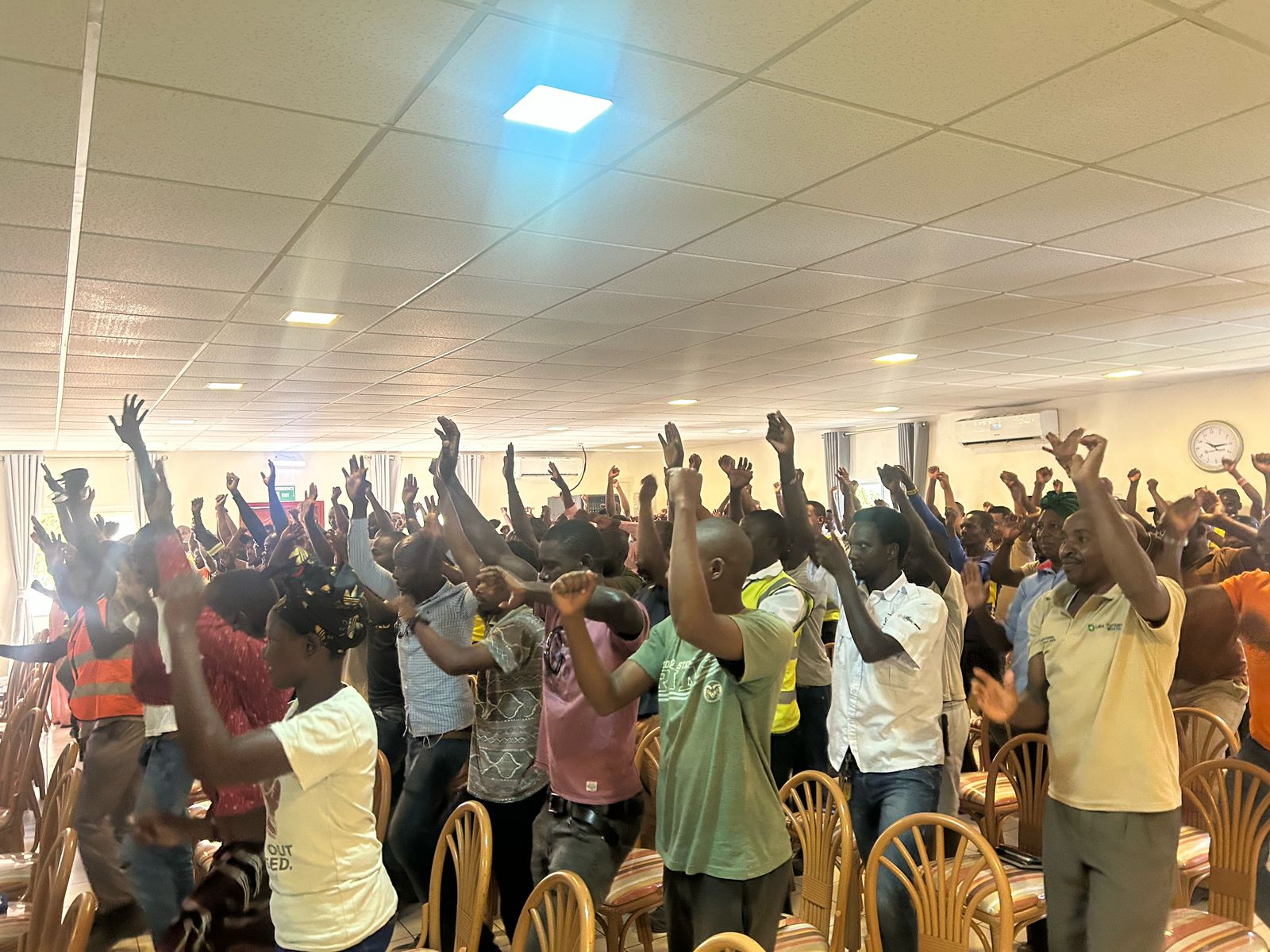
Happy World Day for Safety and Health at Work!
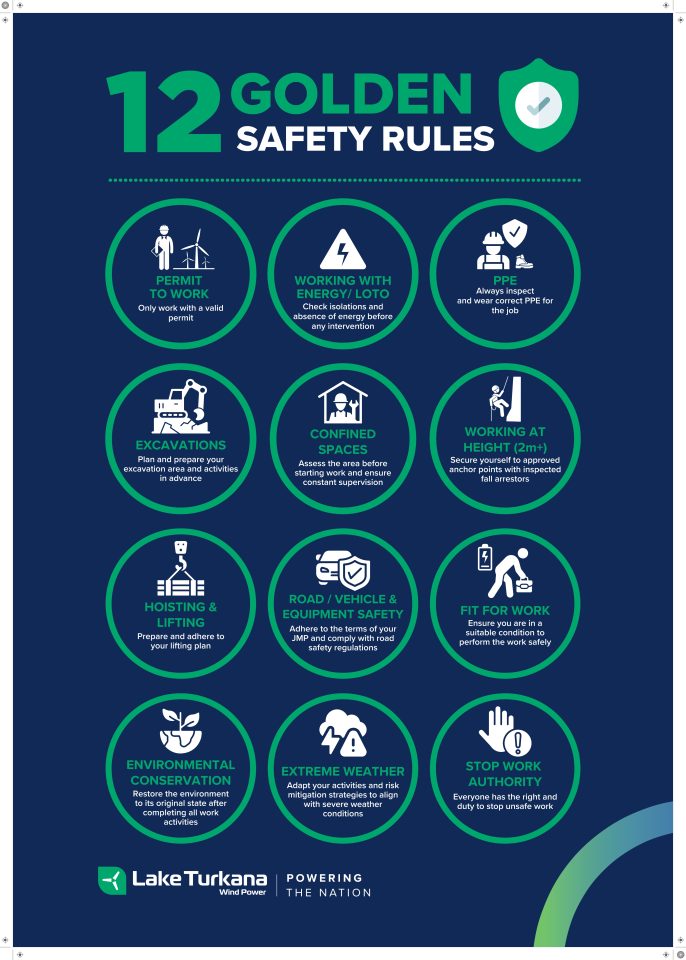
At Lake Turkana Wind Power (LTWP), safety is a deeply ingrained value in all our daily operations. Today, we officially launch our 12 Golden Rules as we also shine a spotlight on the dedicated team members who champion safety and environmental responsibility every day.
We sat down with two colleagues – Jonathan Hall, Site Manager, and Julius Lenjatin, Deputy Site Manager – to get their insights on LTWP’s commitment to a safe and sustainable work environment.
Why 12 Golden Rules?
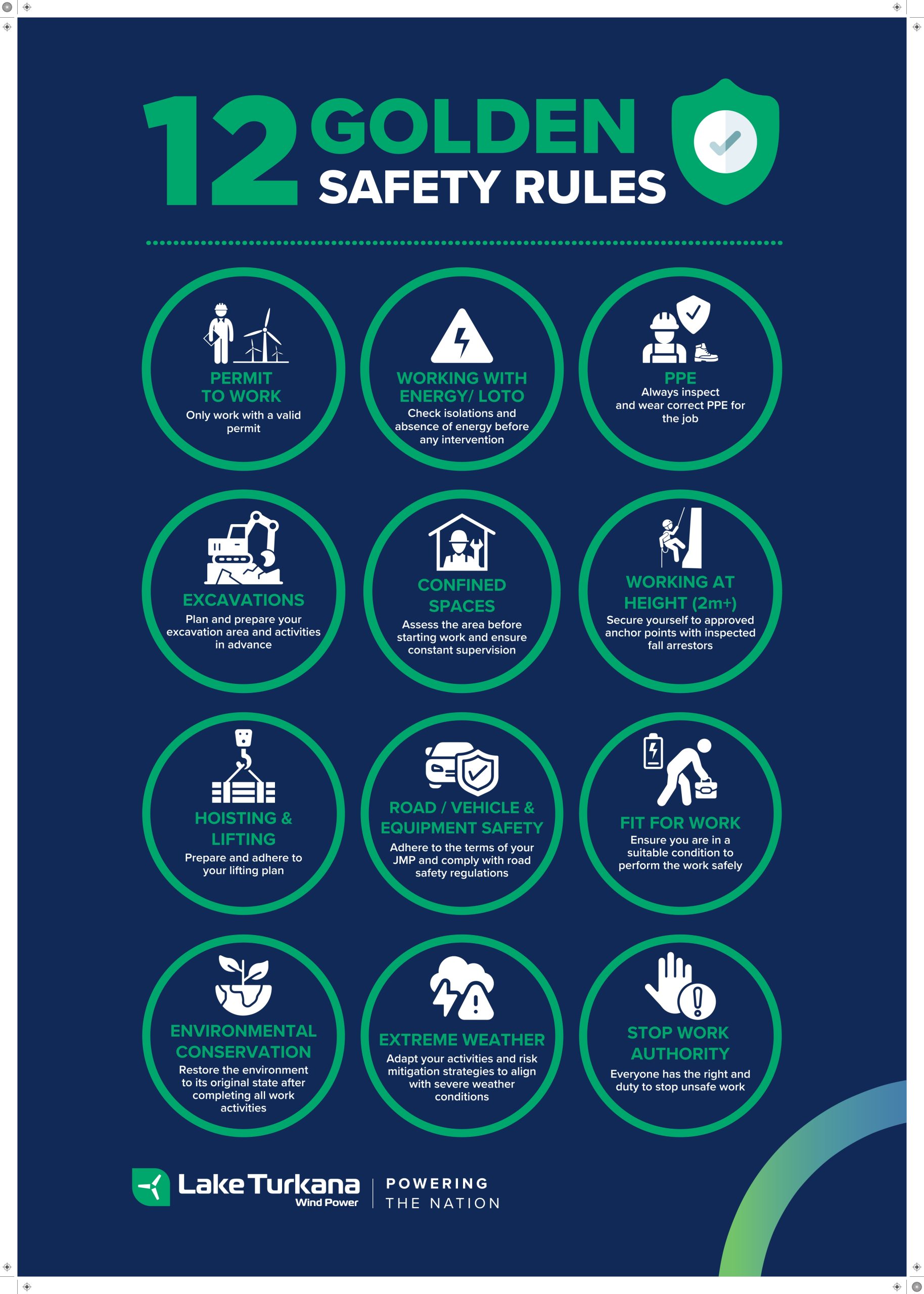
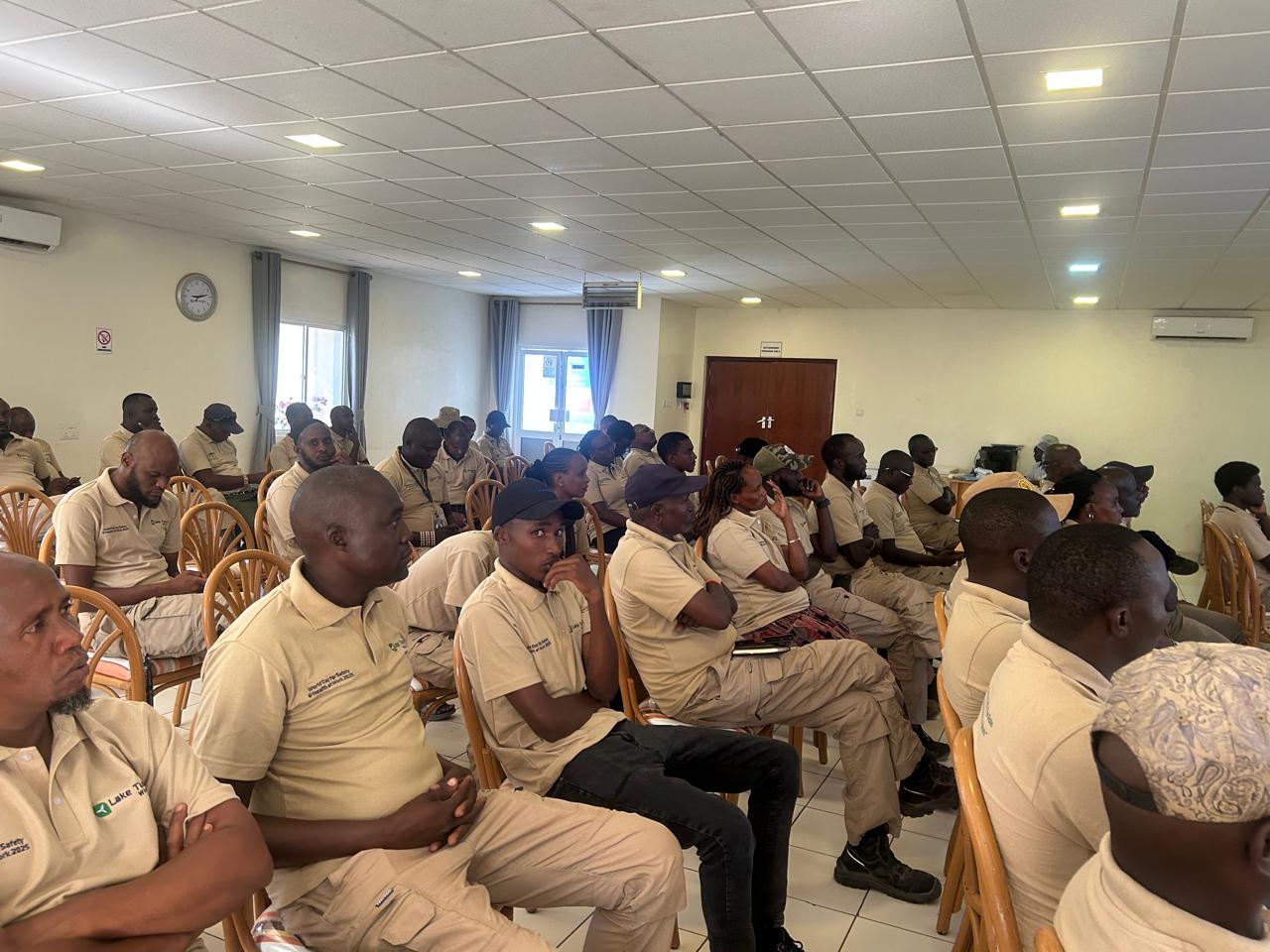
Jonathan Hall explains that the 12 Golden Rules create a clear, common language around safety – simple to understand, visible in daily operations, and enforceable through leadership action. The Golden Rules were developed as part of LTWP’s commitment to strengthening our safety culture and protecting every individual working on site. They are being formally launched on World Safety Day to emphasise their importance and to signal a new, even stronger phase in how we manage health, safety, and environmental risks.
The rules are based on international best practices and lessons learned from our operations. They focus on the critical life-saving behaviours needed to manage high-risk activities consistently across the site, but just as importantly, they are designed to guide daily activities — from how we plan jobs, prepare for tasks, check equipment, move across the site, and intervene when unsafe conditions are seen.
They are important because they create a clear, common language around safety — simple to understand, visible in daily operations, and enforceable through leadership action. By embedding the Golden Rules into our inductions, toolbox talks, safety walks, and supervisor engagement, we make them a living part of the LTWP culture from day one.
But what does this look like in practice?
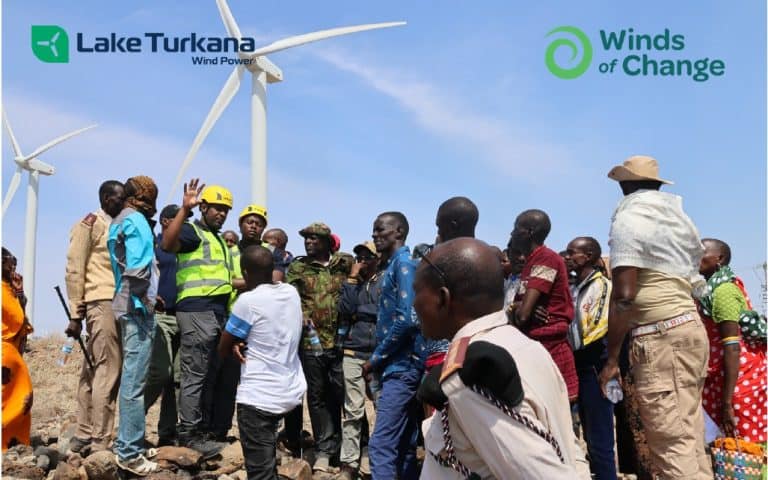
Jonathan gave us a glimpse into his typical day, which starts with attending the PMO Plan of the Day (POD) meeting where a key focus is on HSE performance. From toolbox talks with the workshop team to monitoring the Safety System, Jonathan’s commitment to visible felt leadership is evident.
Jonathan emphasises that when it comes to safety, visible felt leadership is fundamental. “Being present on site, engaging directly with teams, attending toolbox talks, wearing full PPE, and leading by example in upholding LTWP’s site rules, protocols, and procedures,” he says.
One innovative initiative Jonathan highlights is the introduction of a five-minute warm-up and stretching routine at every toolbox talk. This simple yet effective measure has significantly reduced muscle strain incidents and boosted energy levels at the start of shifts.
Tackling the toughest challenges
While all 12 Golden Rules are crucial, Jonathan points out that “Work at Height” continues to be one of the most challenging. Given the technical nature of turbine maintenance, ensuring safe practices at heights exceeding 50 meters requires detailed planning, high competence, and continuous discipline.
LTWP addresses this challenge through rigorous training, best practice modelling by the technical team and Vestas, and constant reinforcement of the basics. Similarly, excavation safety is managed through strict controls, pre-excavation inspections, and visible supervision.
Road safety and the Safety App
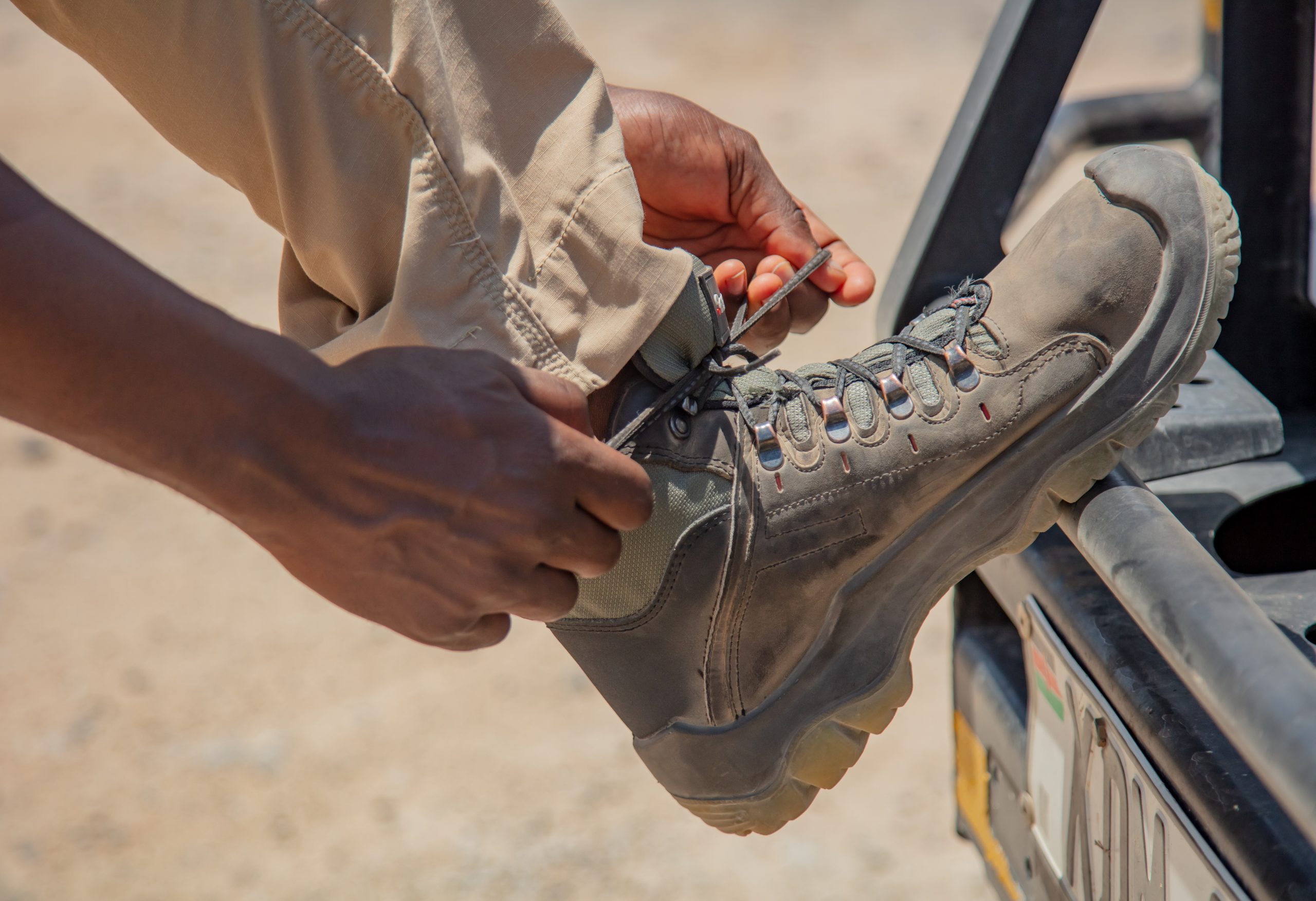
Road safety is another critical focus for us at LTWP, given the vastness of the wind farm. Strict journey management planning, speed restrictions, and vehicle inspections are essential to managing this risk. In addition, LTWP have introduced a comprehensive Light motor vehicle SOP (Safe operating procedure) and an improved seat configuration in our Land cruisers.
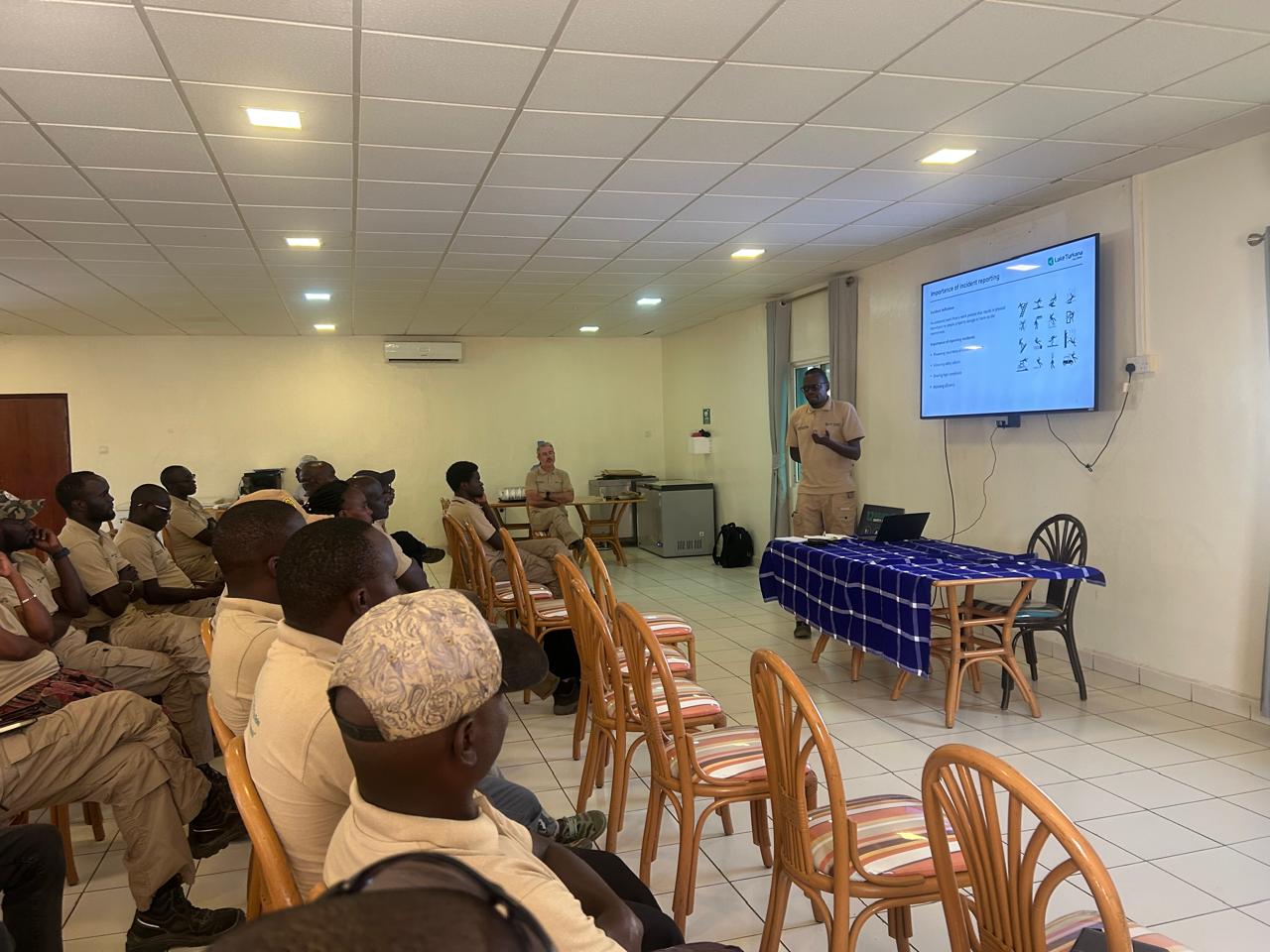
To further enhance safety, LTWP utilises Safety Culture App, allowing employees and contractors to log observations, report hazards, and record incidents in real-time. This app has significantly improved the ability to capture early warning signs and trigger immediate action.
The LTWP Safety Culture App allows any employee or contractor to log observations, report hazards, raise concerns, or record incidents in real-time directly from their mobile device. It provides immediate visibility and faster intervention across site activities.
Eric, our HSE Manager, has played a key role in leading the rollout of the Safety Culture App, working closely with the Head of IT to ensure the system was properly implemented, user-friendly, and effectively adopted across both LTWP teams and contractors.
The App has significantly improved our ability to capture early warning signs, trigger immediate action, and build safety ownership across all levels of the organisation. A recent success was when a loose material hazard at an excavation was reported and secured within hours, preventing a potential serious incident,” Jonathan explains.
Environmental responsibility: A Green Vision
At LTWP, safety extends beyond the physical well-being of our workforce to encompass the environment. Julius Lenjatin, Deputy Site Manager shares his passion for creating green spaces and promoting sustainable practices.
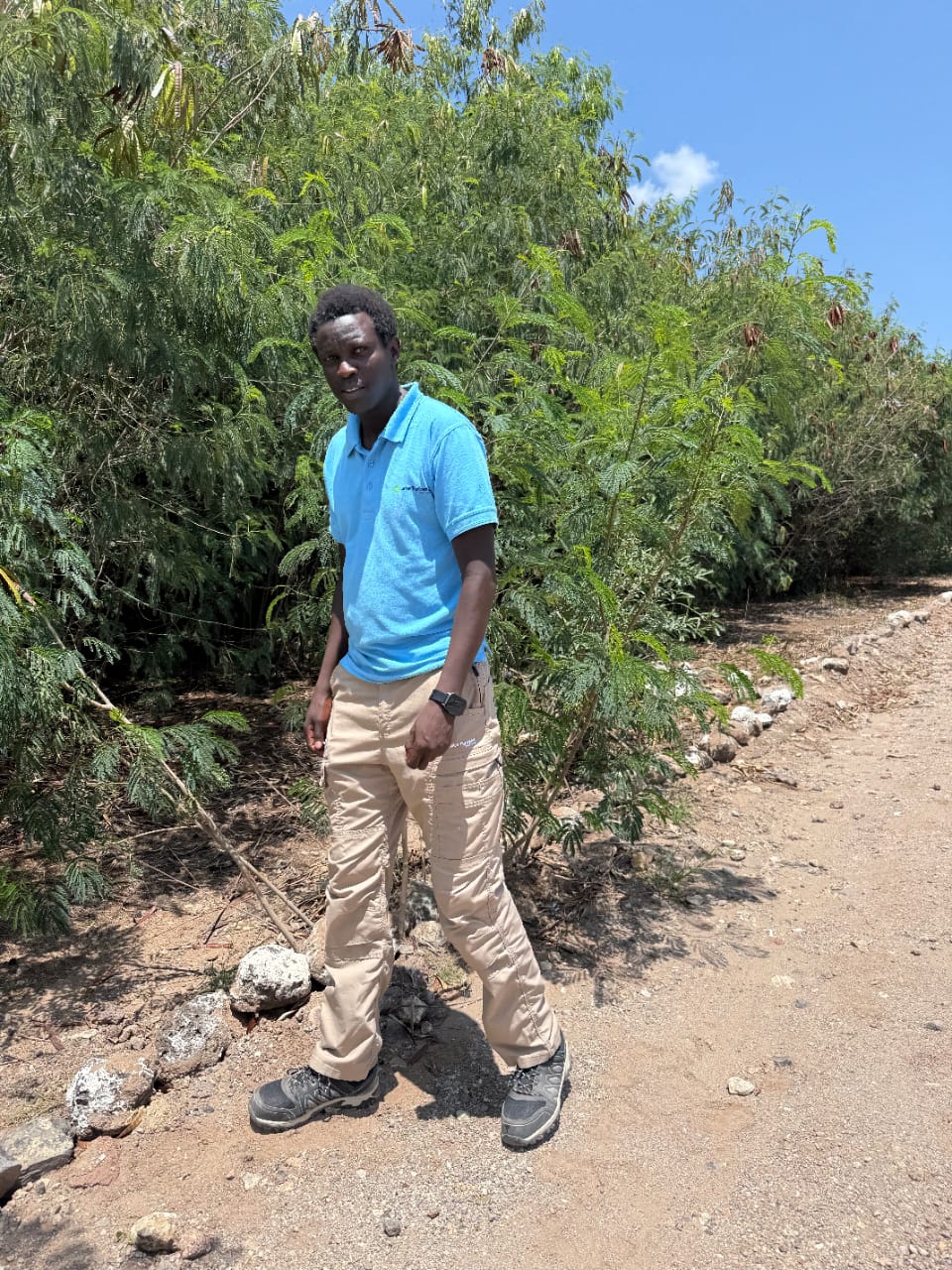
Creating green spaces within the LTWP site started as an initiative back in 2016 when Julius joined the company. He saw the need to replace the trees that were damaged during construction, and more specifically, around the camps, as well as enhance the area’s aesthetics. Together with his colleagues, he set out to create green spaces in all eight camps throughout the wind farm and identified areas where they could plant trees.
A specific green project is the greening effort towards the LTWP main camp, which has a capacity of 175 residents. What started as an initial batch of 150 seedlings has now transformed into numerous small, beautiful forests, totaling in the thousands.
“There are many tangible benefits we enjoy now as a result of this including and not limited to the improved air we breathe as dust is controlled, shaded areas where people can relax, a greater diversity of bird species both inside and outside the camp’s perimeter and the natural beauty provided by the trees, especially when they bloom with flowers.,” Julius says.
We have also noticed that the trees have attracted insects such as bees, as well as various birds and other wildlife. This indicates that our efforts are positively impacting the ecosystem.
Connecting environmental responsibility and workplace safety
Julius says there is a clear connection between environmental responsibility and workplace safety. Good housekeeping, waste management, and responsible disposal of chemicals all contribute to a safer work environment.
Good housekeeping for example, in a construction site, helps in reducing trip hazards, avoid risks like snake bites, scorpion stings that could otherwise have made a home in heaps of unmanaged waste.
Within the 12 Golden Rules, there are specific safety protocols in place to protect the environment. “Environmental Conservation” states, “restore the environment to its original state after completing all work activities”. An example of this is when we constructed an airstrip at the wind farm, and now we are in the process of planting acacia trees native to the area, to compensate for whatever number of trees that were affected during that process.
The LTWP HSE team plays a vital role in supporting environmental initiatives, providing training, resources, and safety protocols to protect the environment during LTWP’s operations.
Fostering a culture of safety
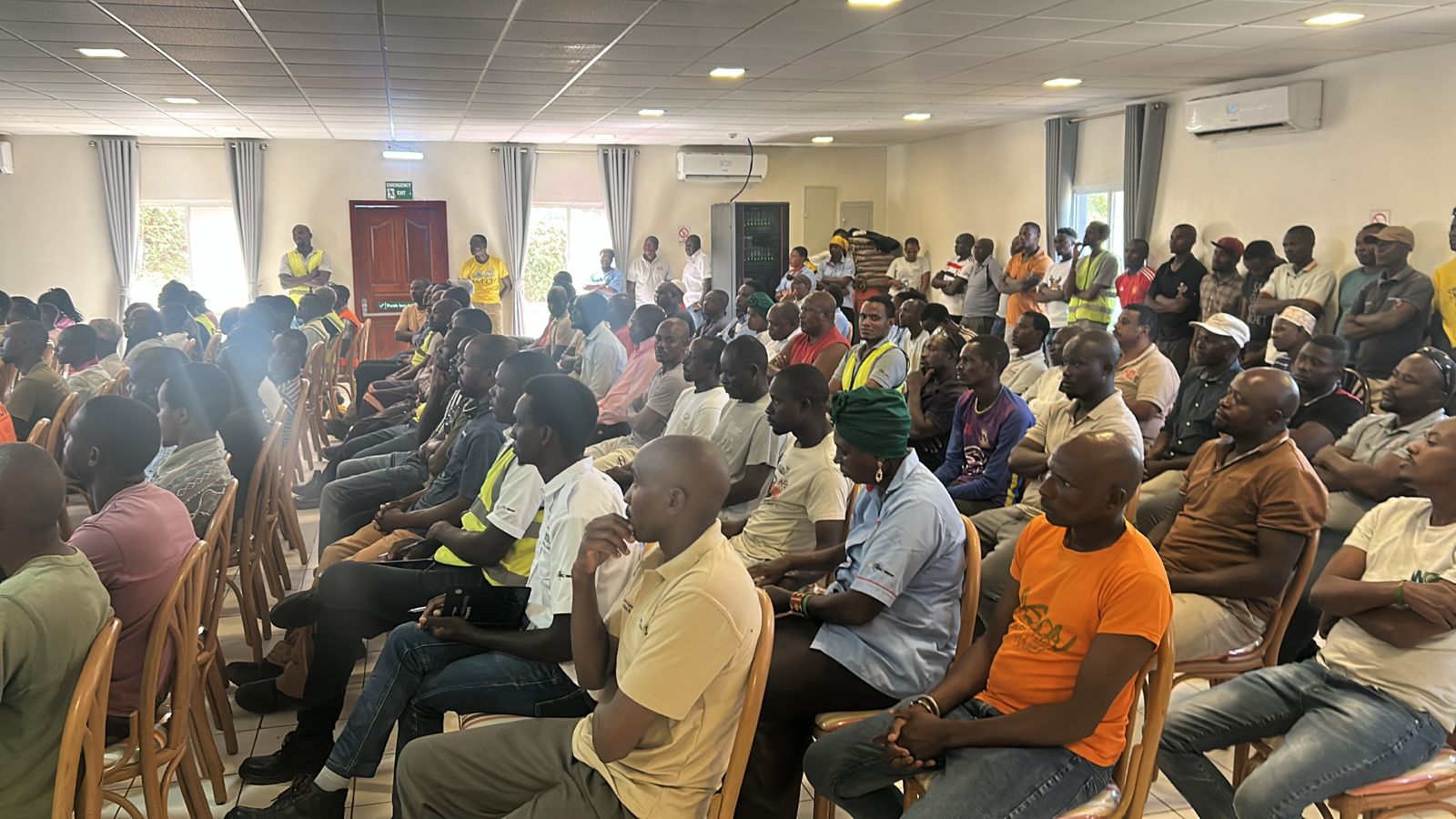
LTWP fosters a culture of safety where everyone feels empowered to speak up about potential hazards or unsafe practices. This is achieved through open reporting, immediate action, and visible support. The Stop Work Authority (SWA), one of LTWP’s 12 Golden Rules, empowers every employee to stop work and escalate any unsafe act or condition without fear of recrimination.
LTWP’s future safety goals are focused on strengthening behavioural safety, improving contractor HSE compliance, expanding predictive analysis of safety data, and strengthening field verification.
Jonathan Hall’s message to other organisations looking to improve their safety culture is clear: “Leadership is action, not intention. If you want a real safety culture, your managers and supervisors must be visible, approachable, prepared, and must live the standards they expect others to follow.”
Julius Lenjatin’s advice for integrating environmental responsibility into a safety culture is equally powerful: “First, we all need to respect our environment; that is the first step to environmental conservation.”
On this World Day for Safety and Health at Work, we reaffirm our commitment to creating a safe, healthy, and sustainable work environment for all. We invite you to join us in celebrating the importance of safety and environmental responsibility, not just today, but every day.