For Billy Lengewa, cybersecurity is not just about whether an attack can happen, but whether you are ready when it does.
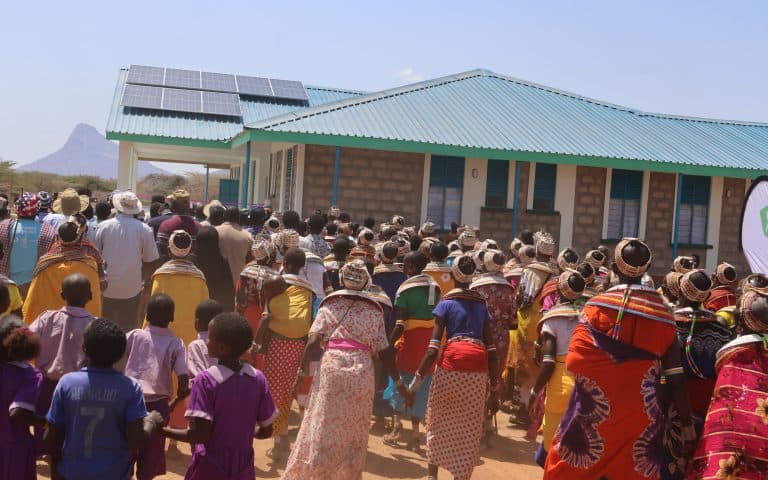
Billy was born and raised in South Horr, a town that neighbours the Lake Turkana Wind Power project site. Growing up in South Horr shaped his worldview in many ways, teaching him the value of community, resilience, and adaptability – qualities that continue to guide him both personally and professionally.
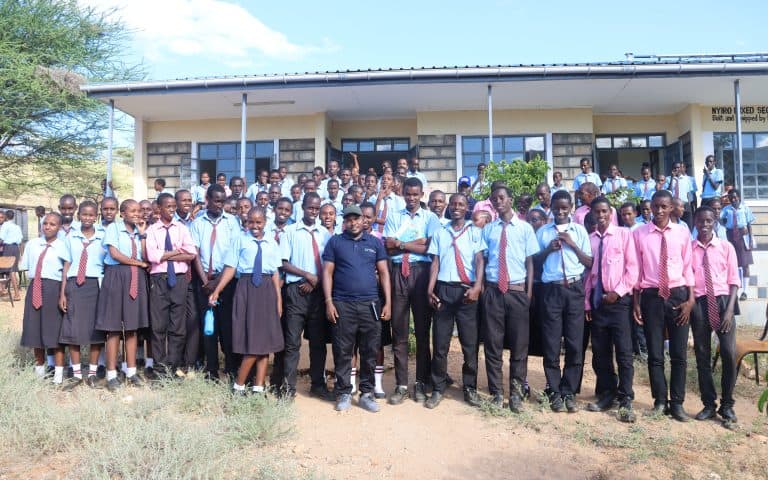
With limited access to digital tools and the internet during his early years, while at Nyiro Boys Secondary School, Billy developed a curiosity about technology and how it could be used to bridge gaps and improve lives. This curiosity led him to pursue a Bachelor’s degree in Business Information Technology, specialising in Information Technology at Jomo Kenyatta University of Agriculture and Technology (JKUAT). In campus, he developed skills in systems administration, networking, cybersecurity, and software development.

Currently, Billy is finalising his MBA (Strategic Management option), which is being partially funded by LTWP at the Kenya Methodist University (KEMU). His research focuses on the influence of the adoption of transformational strategies, such as innovation strategies, on the performance of private power-producing companies in Kenya.
In addition to his academic background, Billy has completed various vendor-specific and professional certifications including Certified Information Security Manager (CISM), Certified Information Systems Auditor (CISA), Fortinet Network Certified Security Professional, and Data Protection and Privacy, among others.
Joining LTWP as an intern
Since joining LTWP as an Information Technology (IT) Intern in 2017, Billy has grown through the ranks, serving in various capacities, including ICT and Access Control Assistant, ICT Officer, Site Head of IT to his current position as Head of IT, overseeing the overall ICT and Innovation functions in the company.
He joined LTWP when construction of the project was coming to an end and transitioning into the operation phase. Then, the IT department was still new and had already started preparing cybersecurity measures. “The initial vision was to establish a resilient IT backbone and ensure that the business could run with minimal downtime,” Billy notes.
Over time, as the business matured, the threat surface increased, and the vision evolved into a proactive strategy driven by three pillars, namely: resilience & scalability, cybersecurity & risk management, and strategic growth & enablement.
Under resilience & scalability, the department migrated the core systems from purely on-site servers to hybrid cloud environments, maintaining more than 99% of all LTWP’s systems. “Additionally, we redesigned our connectivity while introducing several redundancies by eliminating all the single points of failure (SPOF) and onboarding different service carriers,” he adds.
For cybersecurity & risk management, the department adopted a framework and developed a handbook. They also onboarded businesses with several cybersecurity-related tools and activated a security operations centre (SOC).
Under the third pillar – strategic growth & enablement, the department positioned itself as an enabler of LTWP’s strategic goals.
Billy says that to date, LTWP has onboarded several advanced technologies, including hybrid cloud architectures, next-generation firewalls, SOC-related tools, and collaboration systems. The department has also encouraged a culture of cybersecurity awareness among employees.
LTWP as an employer
Billy notes that LTWP has a strong commitment to the professional development of its employees. “Throughout my tenure at the company, I have been able to obtain cybersecurity certifications. Additionally, through exposure to various project implementations, I have developed project management and leadership skills,” he says, adding that what he values most as an employee of LTWP is the opportunity to contribute to a mission that directly impacts Kenya’s green energy transition.
“I appreciate the strong culture of collaboration among employees across all departments, which enables us to solve problems and share knowledge effectively,” he says.

His current goal is to advance LTWP’s digital transformation by driving innovation in IT and cybersecurity while strengthening his leadership style. “Outside LTWP, I am committed to deepening my expertise in IT governance and supporting sustainable initiatives that have a positive impact on my community.”
Looking into the future, Billy says some of the technologies that would be exciting to deploy at LTWP include; autonomous drone inspections with AI capabilities to spot turbine issues in real-time, augmented reality headsets which will enable the Operations & Maintenance team to reduce the mean time to repair, and fully operationalize the Secure Access Service Edge (SASE) to support secure access.