As Africa accelerates its drive towards a sustainable future, wind energy stands as a monumental force, with projects like Lake Turkana Wind Power (LTWP) directly propelling Kenya’s ambitious agenda to achieve 100% green energy transition by 2030.
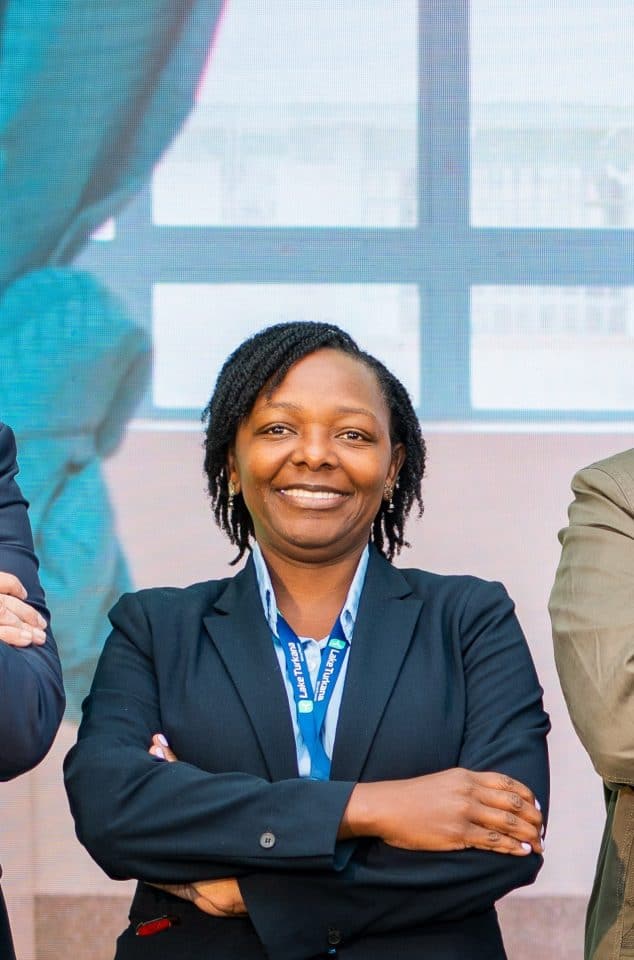
Alice Wathika, the Chief Financial Officer of LTWP, is one of the few women in Kenya’s energy sector who has a front row seat in running Africa’s largest wind farm. She has over 24 years of experience spanning project management, strategic planning, audit, accounting, and risk management.
Alice has also held high-stakes roles in security risk management, port operations, manufacturing, transport, warehousing, clearing and forwarding services, and hospitality.
This experience, she says, is what has honed her keen eye for detail, excellent communication skills, and a thirst to achieve positive results, equipping her with skills in handling complex financial transactions.
Now in its seventh year of full operation, LTWP, a Public-Private Partnership (PPP) project, is a cornerstone of Kenya’s energy supply, contributing a significant 10.89% of the nation’s grid energy in 2024.
A PPP case study
Alice acknowledges that PPPs are complex, and LTWP’s journey was no exception. “Foreign exchange risk, grid delays, and navigating the regulatory environment were significant hurdles. But we learned to anticipate uncertainty, maintain transparent communication with all stakeholders, and build buffers into our financing plan. A flexible but disciplined approach has kept us resilient,” she says.
This resilience is key to maintaining LTWP’s consistent performance, having delivered 1,367 GWh of energy in 2024.
In Kenya, where the demand for large-scale infrastructure development often outpaces traditional public funding capabilities, no doubt PPPs have emerged as a critical mechanism for progress. LTWP is a case study of how a well-structured PPP can unlock significant private sector investment to realise monumental national objectives.
By strategically leveraging government support, particularly through the long-term Power Purchase Agreement with Kenya Power, LTWP has demonstrated that with political will, robust risk-sharing frameworks, and investor confidence, even the most ambitious and capital-intensive projects – like developing Africa’s largest wind farm in a remote region – can be successfully financed, constructed, and operated, setting a precedent for future infrastructure endeavors across the continent.
This model has generated substantial economic benefits for Kenya, including KSh 167 billion in fuel import displacement and KSh 117 billion in energy cost savings since inception (compared to thermal alternatives). In 2024 alone, LTWP contributed KSh 2.6 billion in taxes to the Government of Kenya.
Beyond the balance sheet
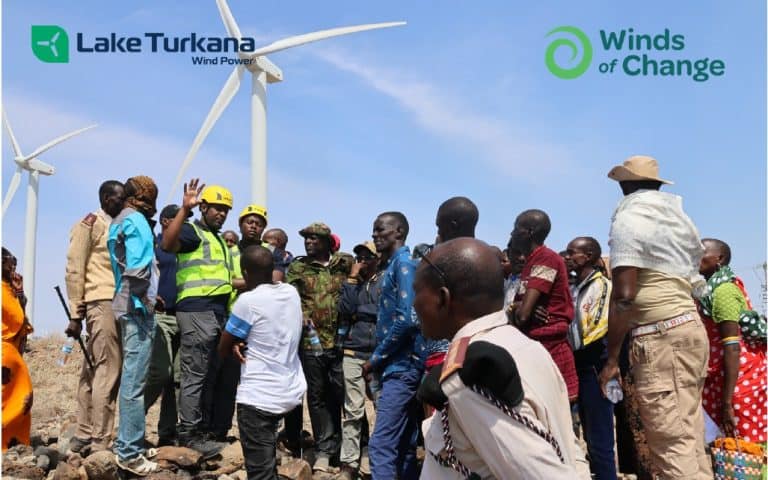
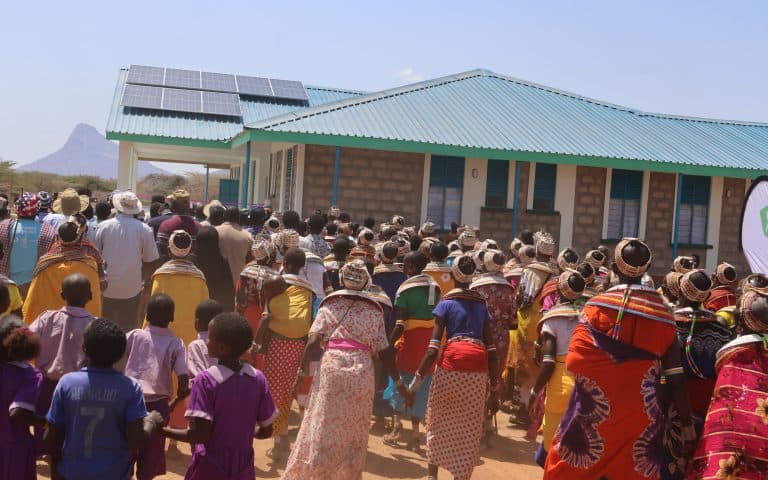
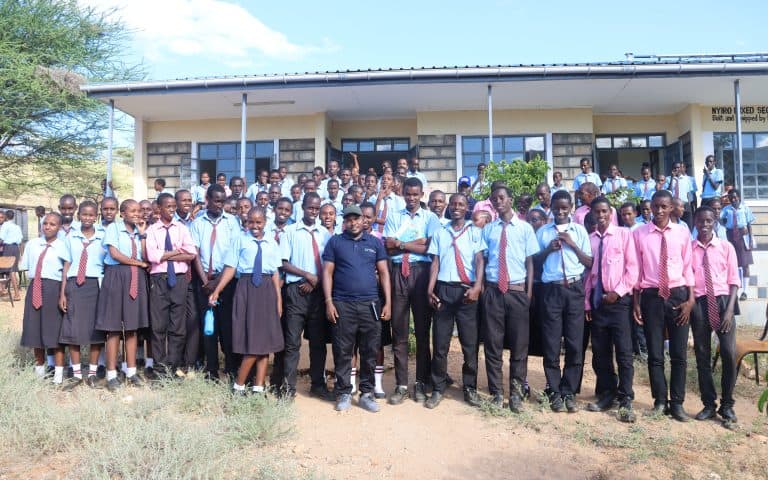
Alice says LTWP is now in the operational phase, and focus has shifted to asset integrity and operational efficiency. Her highlight is the Winds of Change projects. “From the beginning, community integration was a priority for us. A portion of our revenues supports the Winds of Change NGO, which invests in health, education, water and infrastructure in Marsabit County.”

In 2024, LTWP’s community investment through its NGO, Winds of Change amounted to EUR 886,626 (KSh 129.3 million), contributing to a total of approximately 100 community projects since inception.
This includes significant infrastructure projects completed in 2024, such as a 46-bed Male Ward at Laisamis Hospital that serves 116,000 residents, and new classroom blocks at Korr Primary School and Kargi Primary School.
Leadership philosophy
On her leadership style, Alice says it is rooted in empowerment and accountability. “I believe in visibility and accountability. Every department has clear financial KPIs, and we demystify budgeting through regular reviews and cross-functional training. When people understand the ‘why’ behind the numbers, they become true custodians of the company’s success.”
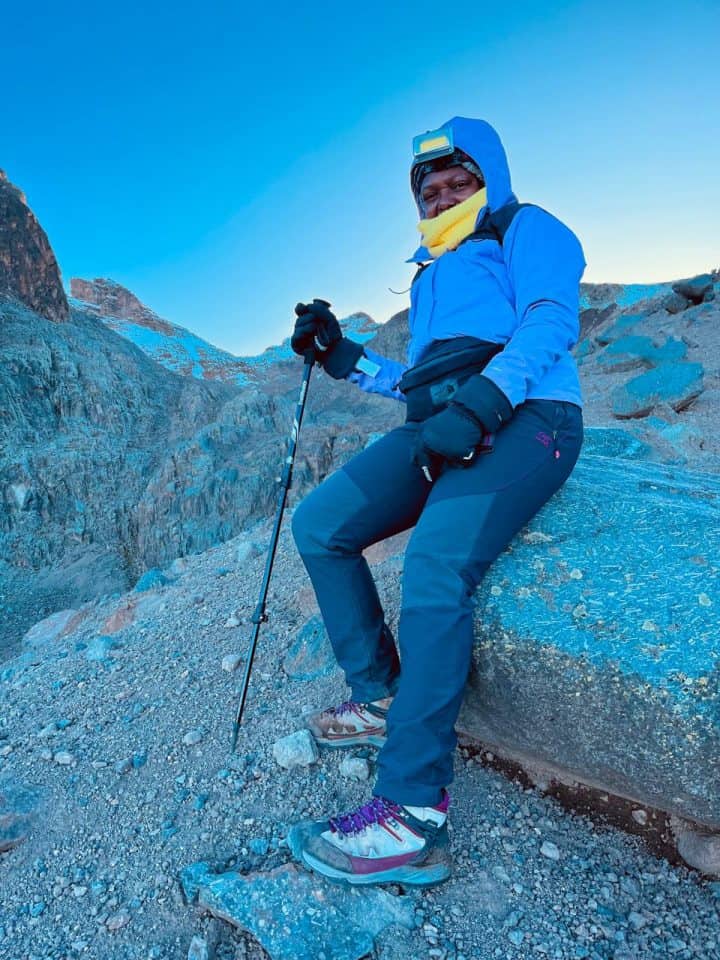
Outside the office, Alice is a hiker. She says she finds her grounding in the outdoors. “Nature grounds me. It is where I reflect, recharge, and reconnect with my purpose. I have learned that showing up as a whole person makes me a better leader.”
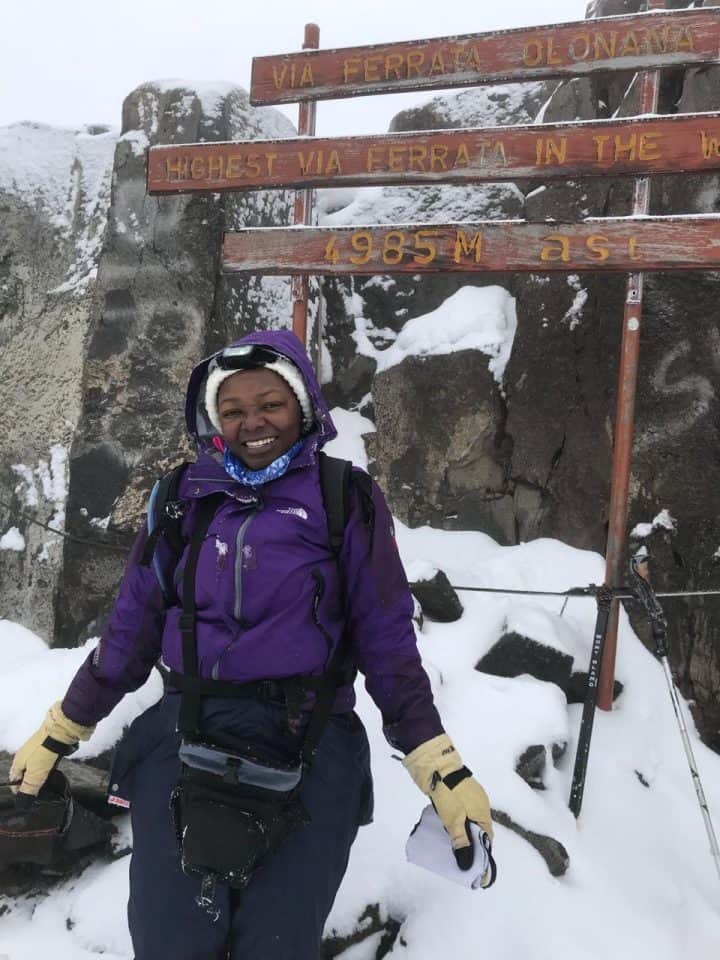
Her determination to conquer Mount Kenya after a failed first attempt also encapsulates her professional ethos. “Failure isn’t final. It is part of the process. The mountain taught me patience, humility, and mental resilience. As CFO, I have faced setbacks too. What matters is how you regroup, learn, and keep climbing.”
This resilience has defined her career, having previously overseen a US$330 million construction initiative, an experience that taught her “about risk, coordination, and the value of structure.”
Inspired by the resilience of Lhakpa Sherpa, the Nepalese mountaineer who holds the world record for the most Everest summits by a woman (ten times), Alice finds resonance in navigating challenging spaces. “Lhakpa’s journey is one of courage, endurance, and clarity of purpose; qualities I deeply admire. Like her, I have had to navigate spaces where I wasn’t expected to lead. Her story reminds me to keep going, no matter how steep the path.”
Breaking barriers
As a female CFO in the energy sector, Alice has broken barriers. “Breaking into a male-dominated space wasn’t easy. Early on, I had to prove not just competence but resilience. I faced unconscious bias and was often the only woman in the room. Over time, I have learned to turn that visibility into influence.”
Her advice to aspiring young women in the industry is: “Don’t wait to be invited; take your seat at the table. Build financial acumen, stay curious, and find your voice. And if you can’t find a mentor, be one to someone else. Our ecosystem needs more women lifting each other up!”
Alice believes in giving back to society and founded One Tree Africa, a charity organisation that has worked with over 600 volunteers.
What makes her most proud? “We have built a legacy. We proved that large-scale renewable infrastructure is possible in Kenya. That is what drives me; knowing we are powering progress, quite literally.”