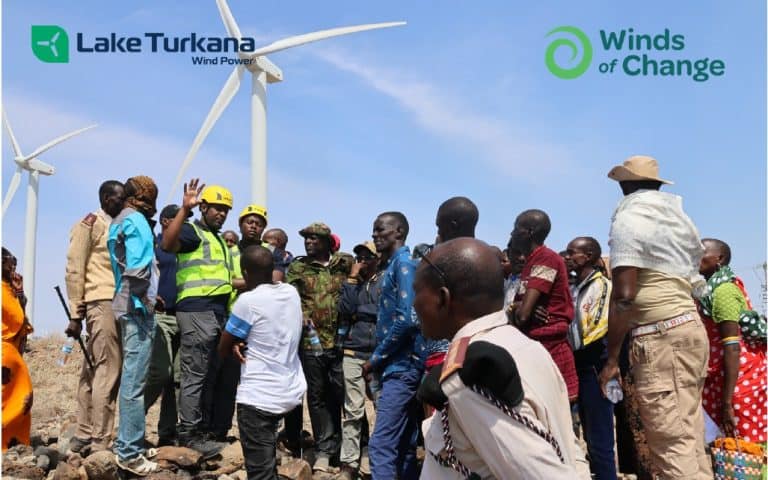
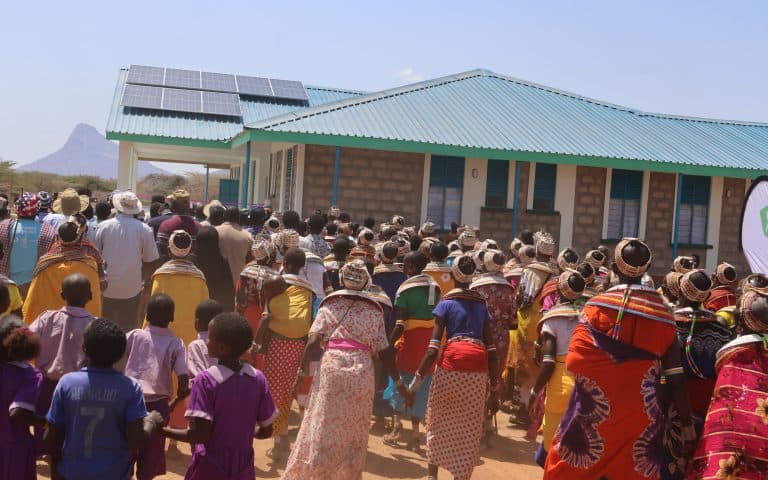
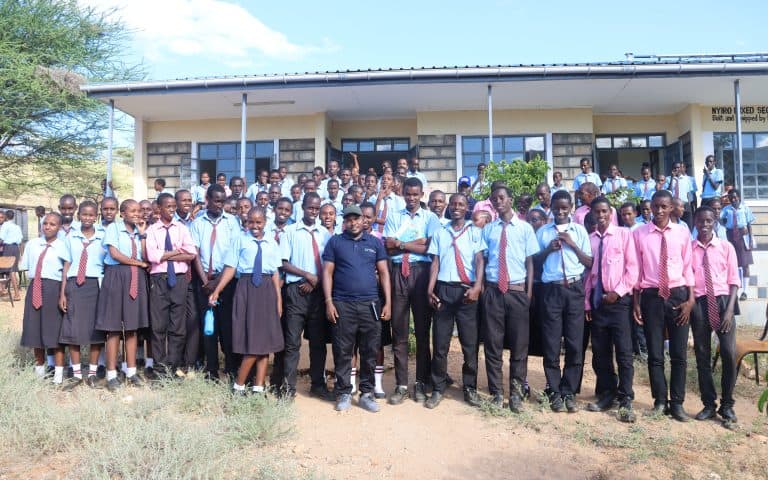
While camping in Kenya’s Marsabit County, Willem Dolleman and a friend from the Netherlands had had an epiphany that sparked an innovative idea. During a fishing trip, they encountered the powerful winds of the Lake Turkana wind corridor, which inspired them to explore the possibility of setting up what is now Africa’s largest wind farm, Lake Turkana Wind Power (LTWP).
Upon returning home, Dolleman began sharing this vision with friends, igniting a journey that would eventually lead to years of feasibility studies. Through various geological tests, it was determined that the Lake Turkana wind corridor was a world-class wind resource and optimal location for a renewable power plant of significant scale.
Today, with 365 turbines and over 300 employees, LTWP contributes reliable, low-cost energy to Kenya’s national grid, accounting for approximately 10% of Kenya’s installed capacity.
Bringing this vision to life wasn’t a walk in the park. The road was paved with challenges, starting with the sheer inaccessibility of the site. Getting to Loiyangalani was a logistical nightmare. Then came the fundraising… a highly complex three-year process involving multilateral and bilateral lenders from across Africa and Europe.

Turbines of Marsabit along the wind corridor
The Turbines of Marsabit podcast beautifully captures LTWP’s journey – from the initial spark of an idea, through the grueling funding process, to t he construction, commissioning, and the first six years of full operation. It’s a story worth hearing, packed with insights from Mugo Kibati, our former chairman, and CEO Max Schiff. This is the story of a project that defied the odds to bring clean, reliable energy to Kenya.
In the podcast, Mr Kibati describes in detail how the Lake Turkana Wind Power project came to be, sharing its origins, the choice of location, and the funding complexities – including the World Bank’s early withdrawal and the subsequent investment by the African and East African Development Banks, European Investment Bank and numerous international bilateral and commercial lenders, alongside the founding shareholders. He also clarifies that the name “Lake Turkana” refers to the wind corridor rather than the lake itself, as the project is located in Marsabit County.
Initially, LTWP faced significant hurdles in securing funding, as investors were sought for the 310MW power plant, located over 400 km from the national grid. Mr Kibati recalls, “To contemplate a project of this size—one billion dollars at the time—was daunting. How could we transport equipment? Where would we house engineers? There were no roads or airstrips available.”
Yet, despite early skepticism from various stakeholders, the founding team persevered, conducting geological, wind and route surveys and energy studies to ensure the project’s bankability and sustainability. Mr Kibati emphasizes the importance of sustainability, noting, “You want a project to thrive not just today but, in the decades to come.”

Timing aligned with a global shift towards clean energy, particularly as Kenyan policymakers began integrating renewable energy into their frameworks. When the Power Purchase Agreement was finalised, a competitive tariff at 8.7 US cents per kilowatt-hour was achieved – reflecting our commitment to delivering affordable and clean energy.
In discussions about Kenya’s future, Mr Kibati highlights the critical need for public-private partnerships. He asserts that no nation can achieve transformational growth or world-class infrastructure solely through taxpayer funding.
After a decade of hard work, Mr Kibati reflects on his tenure with pride, stating, “We’ve achieved what we set out to do. Lake Turkana now supplies a significant portion of Kenya’s energy needs from a renewable source, and I am proud to have helped position Kenya on the global renewable energy map.”
In case you missed Season 1 of Turbines of Marsabit, you can watch it on our YouTube channel and on our Spotify account.